LED Neon vs Glass Neon: Best Choice? 7 Proven Differences
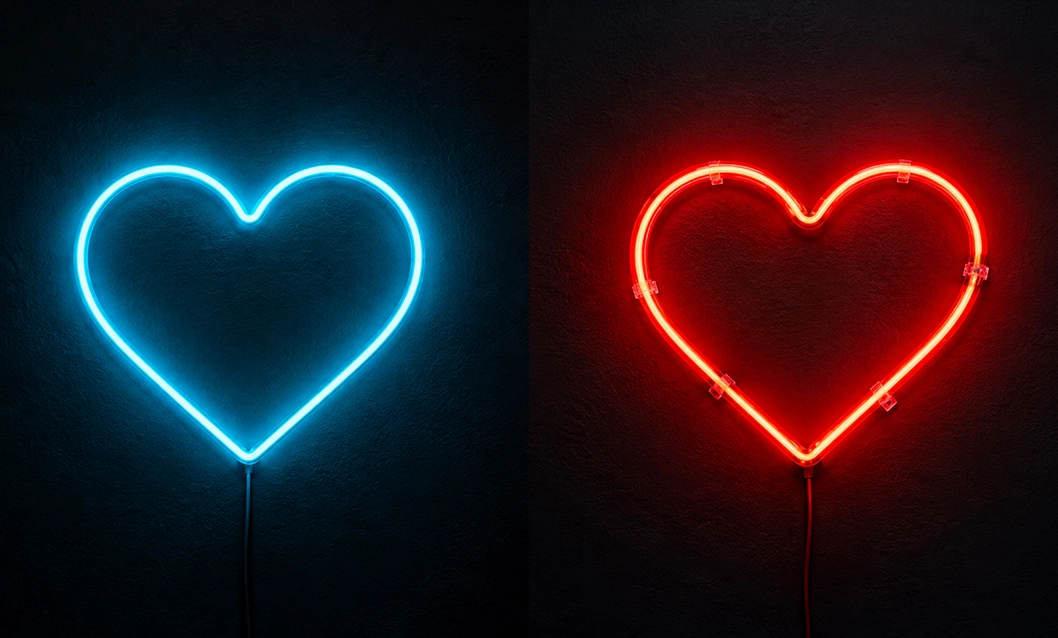
When you weigh led neon vs glass neon for a custom sign, you are choosing between two technologies that look alike from across a room and behave very differently up close. Glass neon is a handcrafted tube of gas lit by high voltage. LED neon uses small light diodes inside a flexible diffuser running on low voltage.
For most homes, businesses, and events, LED neon is the more practical choice: it runs at low voltage, draws a fraction of the power, weighs less, and ships and installs without fragile glass. Glass neon still earns its price when you want the warm, continuous glow and handmade character that only real gas and bent glass produce.
Quality varies widely on both sides, so every comparison below assumes a well built sign, a sensible design, and a proper installation. You will also see where common marketing claims about lifespan, efficiency, and waterproofing go further than the evidence supports.
What Are the Main Differences at a Glance?
The two technologies split on how they make light: glass neon excites gas with thousands of volts, while flex LED neon spreads light from low voltage diodes through a diffuser. That single difference drives almost everything else, from power bills and heat to weight, repairs, and how freely a design can bend.
How Do Gas Filled Glass Tubes and Flex LED Neon Work?
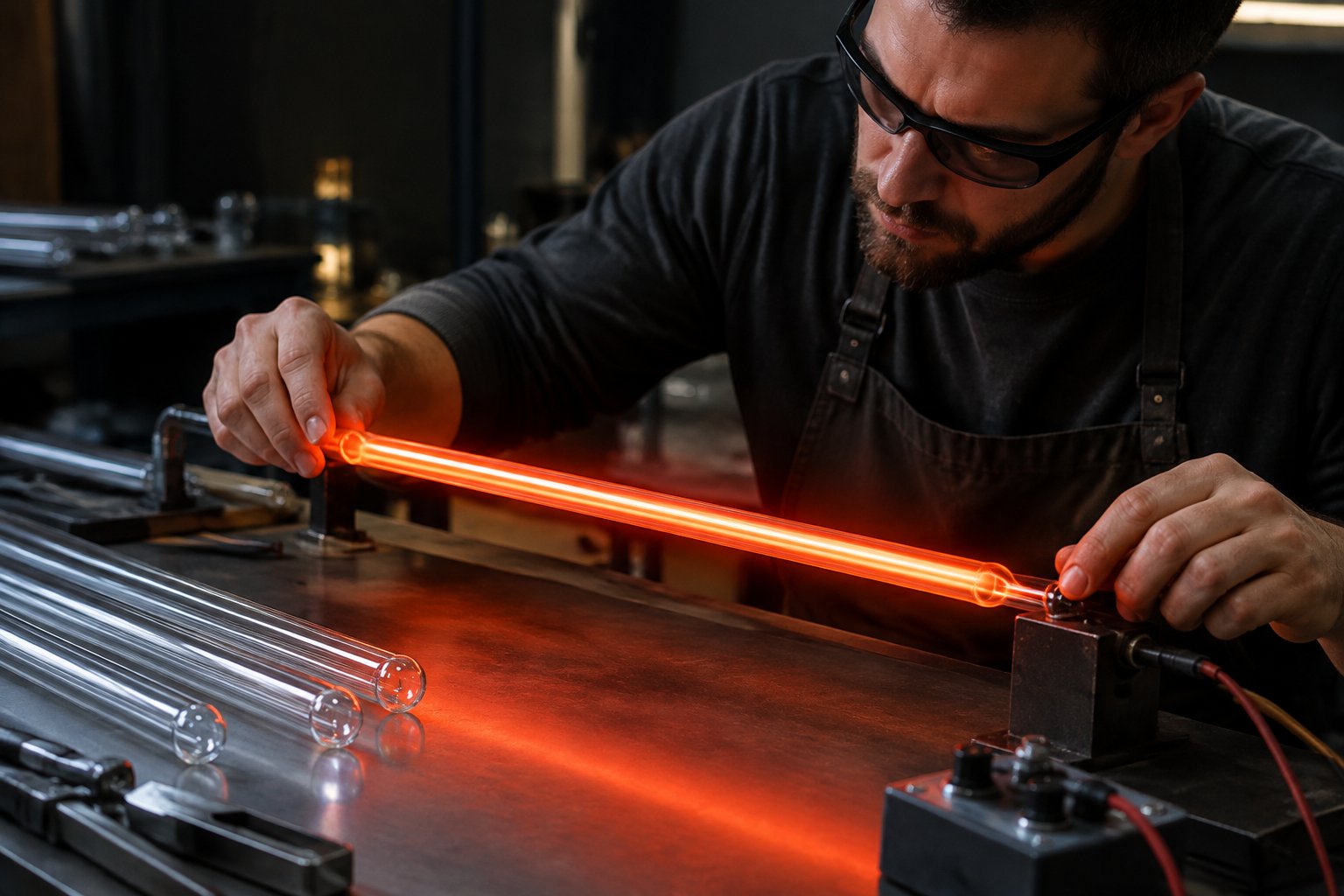
A glass neon sign starts as straight glass tubing that a craftsperson heats and bends by hand into letters or shapes. The finished tube is sealed, filled with a small amount of neon or argon gas, and connected to electrodes. A transformer steps household current up to a high voltage, and that charge makes the gas glow.
Color comes from the gas and the tube coating. Neon gas gives the classic red orange; argon with phosphor coatings produces blues, whites, and many other shades. Because the light travels through the whole tube, the glow looks continuous from end to end.
Flex LED neon works differently. Rows of tiny LEDs sit inside a flexible silicone or PVC channel, and a frosted diffuser blends the individual points into a smooth line of light. Many custom signs mount this flex onto a clear acrylic backboard cut to the shape of your design.
A separate power adapter converts wall current to low voltage, commonly 12V or 24V DC. Color comes from the LEDs themselves, which is why one strip can be a single fixed color or a full RGB strip that changes on command.
The wattage figures are typical estimates for common signs. Your sign’s actual draw depends on its length, color, and power supply.
Which Option Costs Less to Buy and Run?
LED neon costs less on both ends, at checkout and on your electric bill, though the size of the savings depends on the sign. Glass neon carries a premium for skilled handwork, and its higher wattage adds up over years of use.
LED Neon vs Glass Neon: Purchase Price and Total Ownership Cost
Glass neon is priced like a craft product because it is one. Every curve in a glass sign is bent by hand over a flame, and complex lettering takes hours of a skilled bender’s time. You also pay for the transformer, careful packaging, and often local installation.
LED neon is faster to produce. The design is cut in acrylic, the flex is shaped and mounted, and the sign ships with a plug in adapter. That production speed is the main reason LED versions of the same design usually cost noticeably less.
Total ownership cost adds three more lines to the bill:
Electricity, which favors LED by a wide margin (covered below).
Repairs, where glass tubes need a neon specialist and LED faults often come down to swapping an adapter.
Shipping and replacement risk, since glass can crack in transit or after a bump.
If you plan to run the sign for many hours a day, the gap widens each year.
Which Uses Less Electricity?
LED neon uses far less power. Typical estimates put LED neon at 3 to 4 watts per foot against about 20 watts per foot for glass. For a mid size sign running regularly, that works out to roughly $1.30 versus $6.50 a month at 2026 electricity rates.
Those numbers make LED the clear pick if you want energy efficient neon signs, but be wary of round percentages. Claims like “saves 80% energy” or “costs one fifth to run” circulate widely without stating the sign size, hours, or rate behind them. Your actual savings depend on the sign’s length, how long it stays on, and your local utility price.
A simple way to check: look at the wattage on the adapter label, multiply by hours used, and apply your utility’s rate per kilowatt hour.
Which Is Safer, More Durable, and Easier to Install?
LED neon is easier to live with on all three counts: it runs cooler at low voltage, survives knocks that would crack glass, and hangs like a picture frame. Glass neon is safe when professionally built and installed, but it asks more of you and of the space.
LED Neon vs Glass Neon: Electrical Safety, Heat, and Breakage
Are LED neon signs safe? A well made LED sign running from a certified adapter is a low risk product for homes, nurseries, cafes, and event venues. The sign itself operates at low DC voltage, and the flex stays cool enough to touch.
Glass neon relies on a transformer that produces several thousand volts. Professional builders design for this with insulated housings and proper wiring, so a good glass sign is not dangerous. The tubes do get warm, and a broken tube exposes sharp glass and live electrodes.
Some sellers describe LED neon as “completely safe” or “fireproof.” Avoid taking that literally. Safety depends on the adapter, the wiring, and the build quality, so check for a recognized safety certification on the power supply and avoid covering the adapter where heat can build up.
Do LED Neon Signs Last Long, and How Do Repairs Compare?
Do LED neon signs last long? A quality LED sign gives many years of normal use. You will often see a figure of 50,000 hours quoted, and some sellers claim LED lasts six times longer than glass. Treat these as rated or marketing estimates, since real lifespan depends on component quality, heat, and how many hours a day the sign runs.
Glass neon also has a long working life when it is undisturbed. Many vintage signs have glowed for decades, and their parts are repairable: a neon shop can rebend a cracked section, refill gas, or replace a transformer.
LED repairs look different. The most common failure is the power adapter, which is cheap and easy to replace. A damaged section of flex is harder to fix in place, so many owners replace that segment or the full sign.
How Do Weight and Installation Requirements Differ?
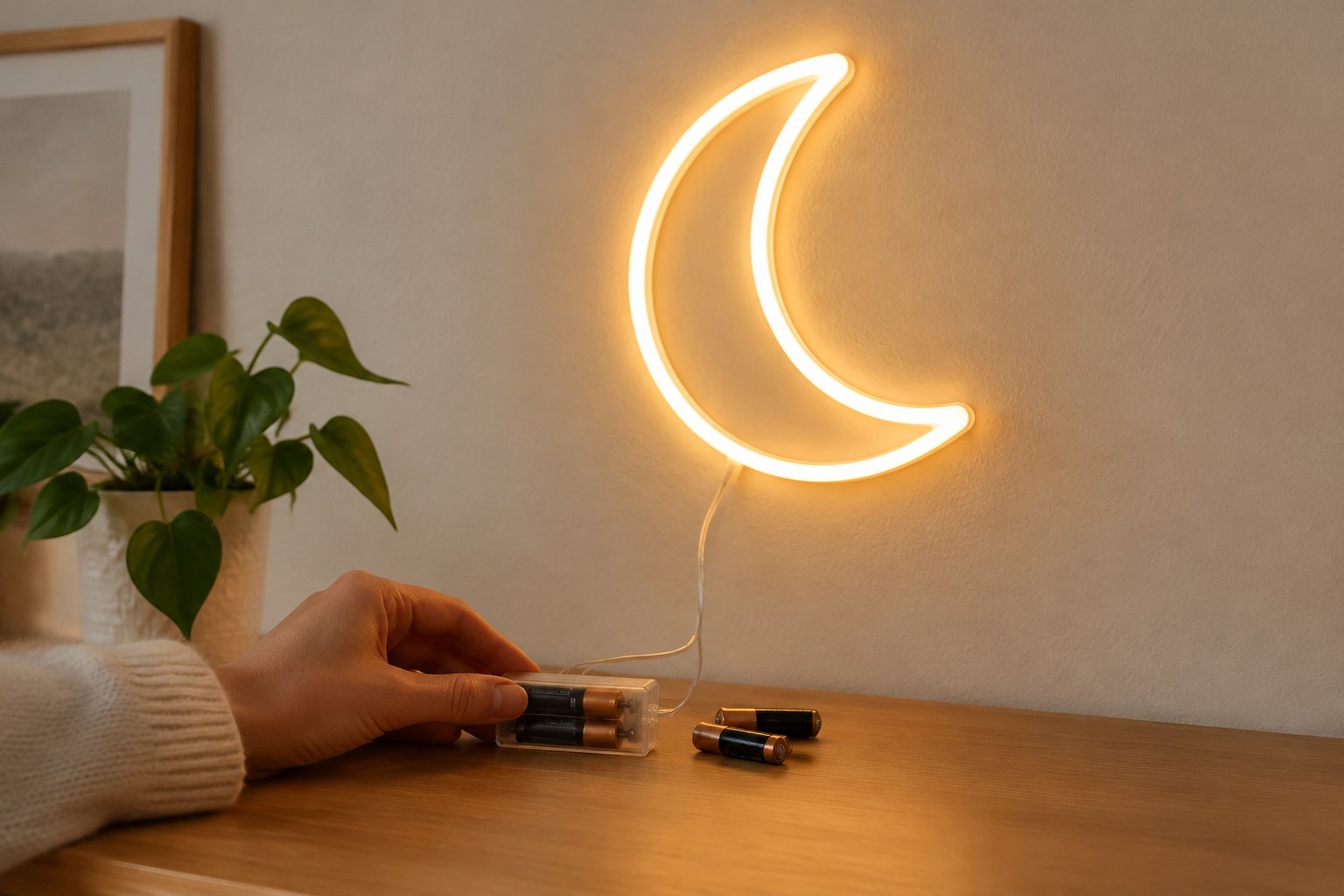
LED neon is light. Most home and event signs hang from two screws, a chain, or a stand, and plug into a standard outlet. You can move one between rooms or carry it to a wedding venue without special handling.
Glass neon is heavier once you add the tubing, mounting standoffs, and transformer. Larger pieces often need secure wall anchors and an electrician or neon installer, especially for storefronts. Shipping is costlier and riskier, so many glass buyers work with a local shop.
For rentals, pop up shops, and events, that portability is often the deciding factor.
How Do the Glow and Design Options Compare?
Glass neon wins on authentic glow, and LED neon wins on flexibility of color, shape, and control. Which one appeals to you comes down to whether the light itself is the point or the message and design are.
LED Neon vs Glass Neon: Brightness and Authentic Glow
In any real neon vs led neon debate, glass has the edge in character. Its gas glows evenly through the whole tube and radiates in every direction, creating a soft halo with depth. Photographers and collectors prize that look, and it is hard to fully replicate.
LED neon is bright and very even, and a good diffuser hides the individual diodes well. Viewed straight on, a quality LED sign looks close to glass. From an angle or up close, the light reads a little flatter because it shines mostly forward through the diffuser.
Claims that LED is “brighter than glass” or “identical to real neon” oversimplify things. Brightness depends on LED density, diffuser thickness, color, and the room. If you are torn, compare both side by side in similar lighting.
Which Offers More Colors, Shapes, and Lighting Controls?
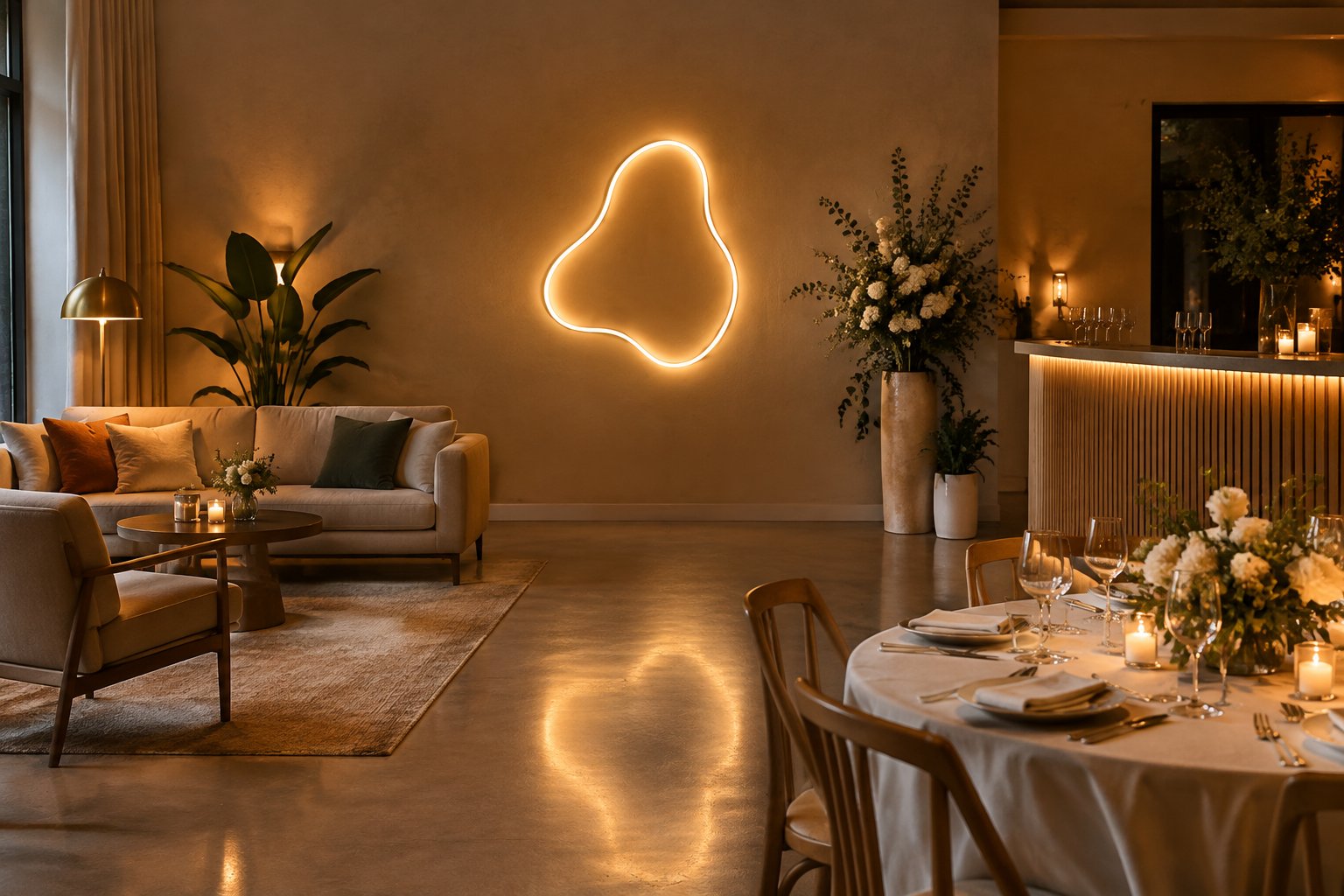
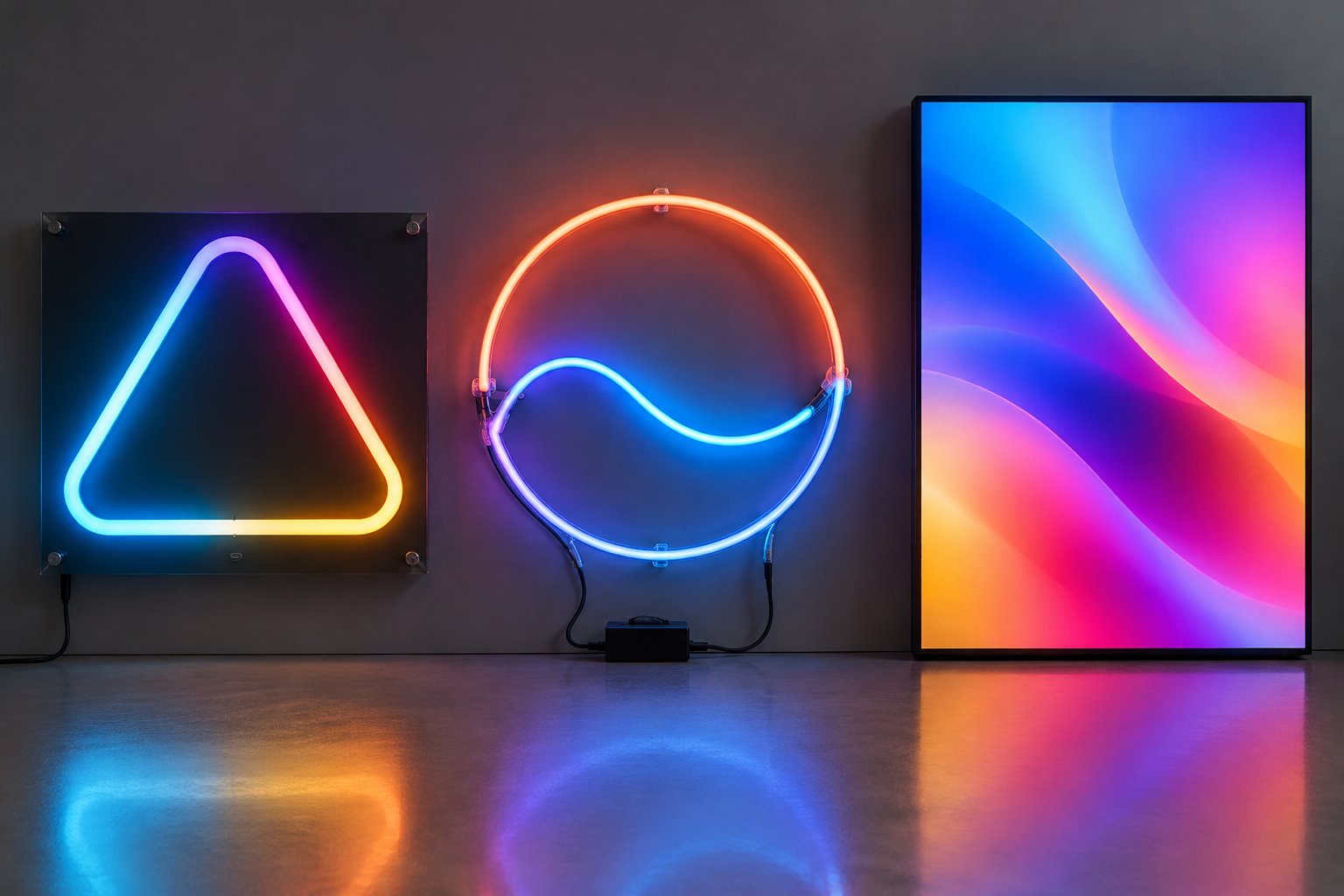
LED neon offers more design freedom. You can choose from a wide palette of fixed colors or RGB options that shift color, plus dimmers, remote controls, and animated modes. Small script lettering and detailed logos are easier because the flex bends tightly and the acrylic backing holds fine shapes.
Glass neon colors come from gas and coatings, giving a beautiful but narrower range. Tight curves and very small text are limited by what glass can do without breaking. Dimming is possible with the right transformer, though color changing is not practical.
When weighing LED neon sign pros and cons for design:
Pros: more colors, dimming, RGB effects, fine detail, logos with backboard printing.
Cons: less depth in the glow, and RGB or animated builds add cost.
Which Sign Should You Choose for Your Space?
Choose LED neon if you want a bright, low maintenance sign for daily use or events, and choose glass neon if the handmade glow is the reason you are buying. Your setting, budget, and whether the sign lives indoors or outside narrow the choice further.
Are LED Neon Signs Worth It for Homes, Businesses, and Events?
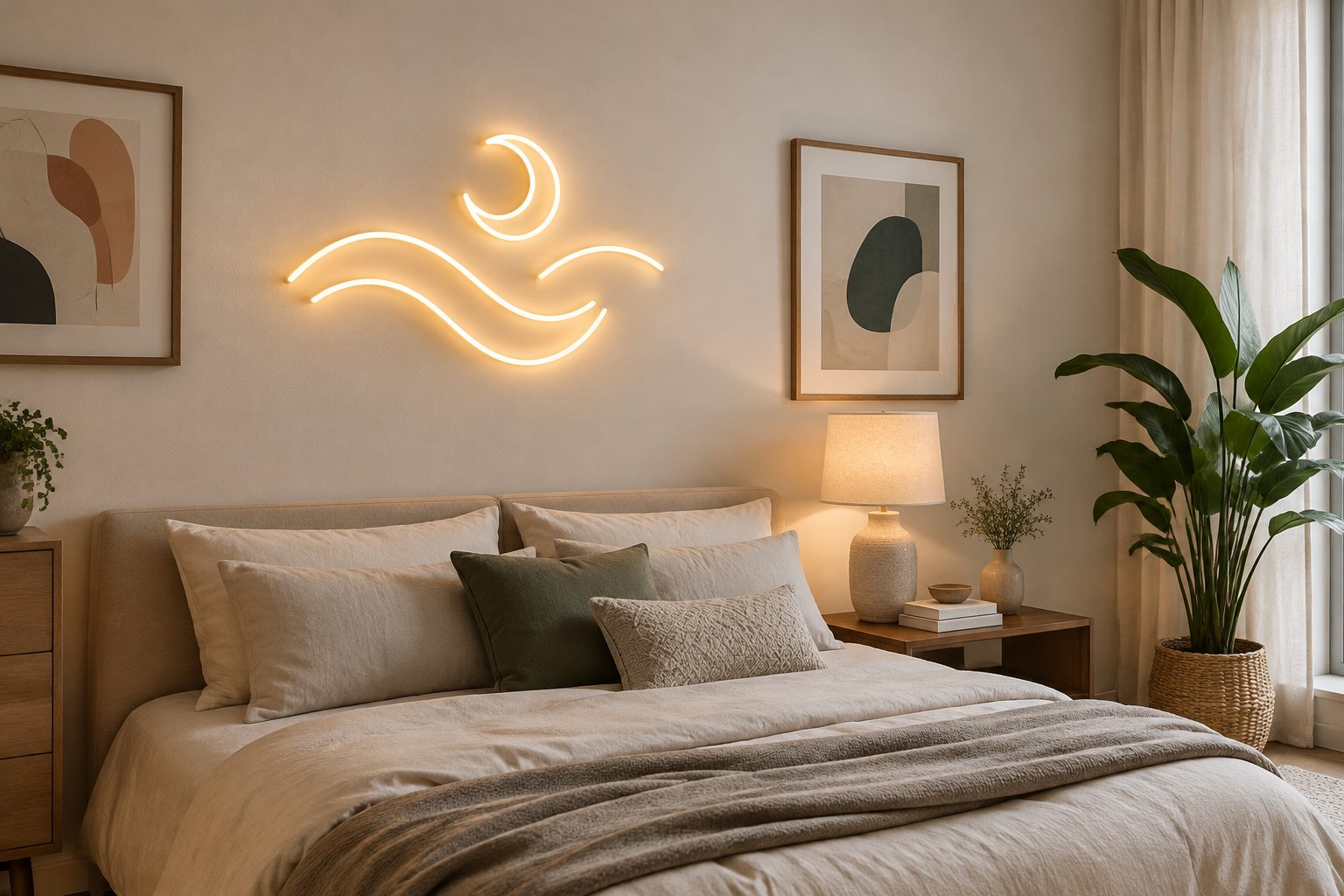
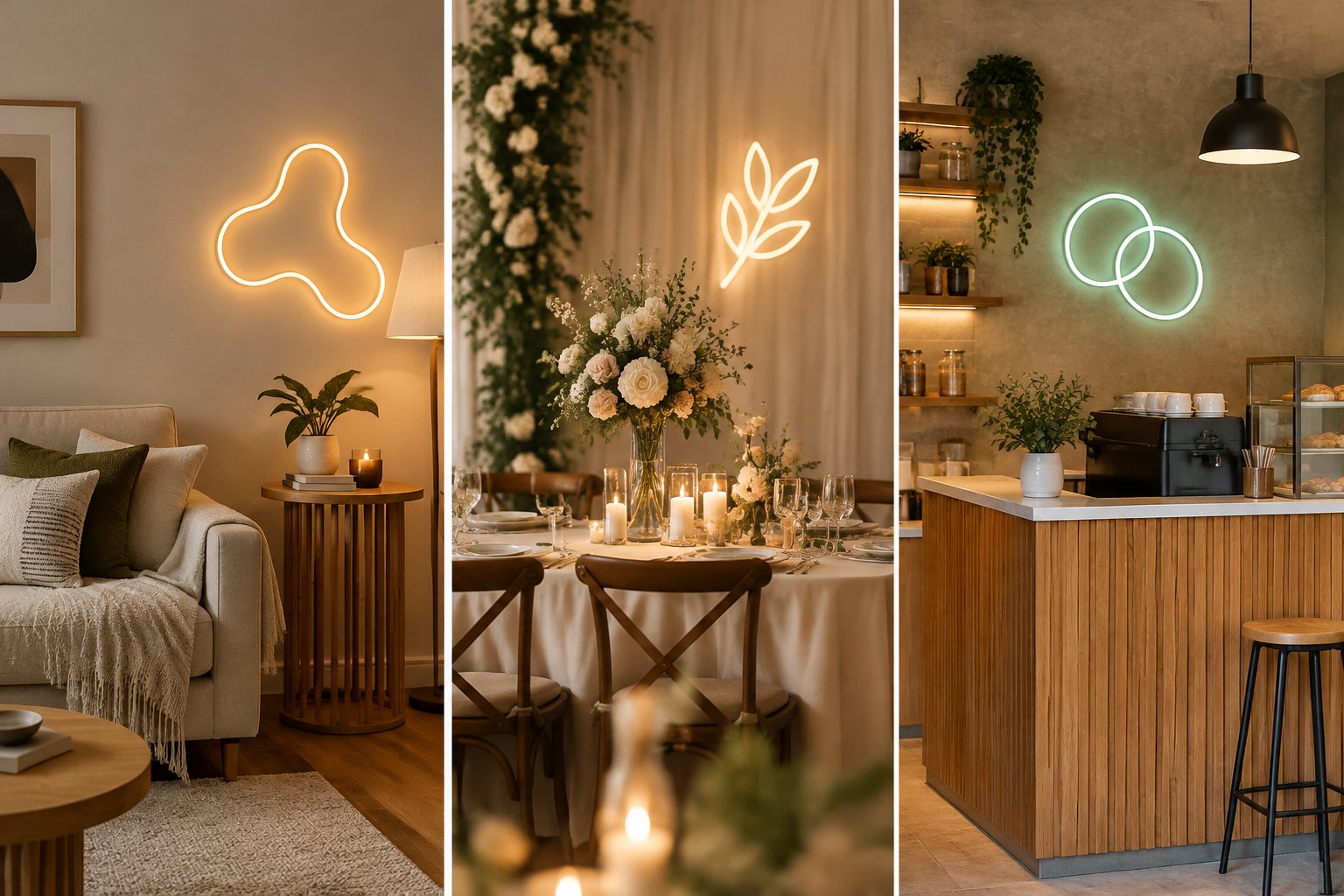
Are LED neon signs worth it? For most buyers, yes. A bedroom or game room benefits from cool running flex and easy dimming. Cafes, salons, and retail shops get a brand colored logo that runs all day at low wattage.
Events are where LED shines most. A wedding name sign or a “Better Together” backdrop needs to travel, hang quickly, and survive being packed up again. Glass rarely fits that routine.
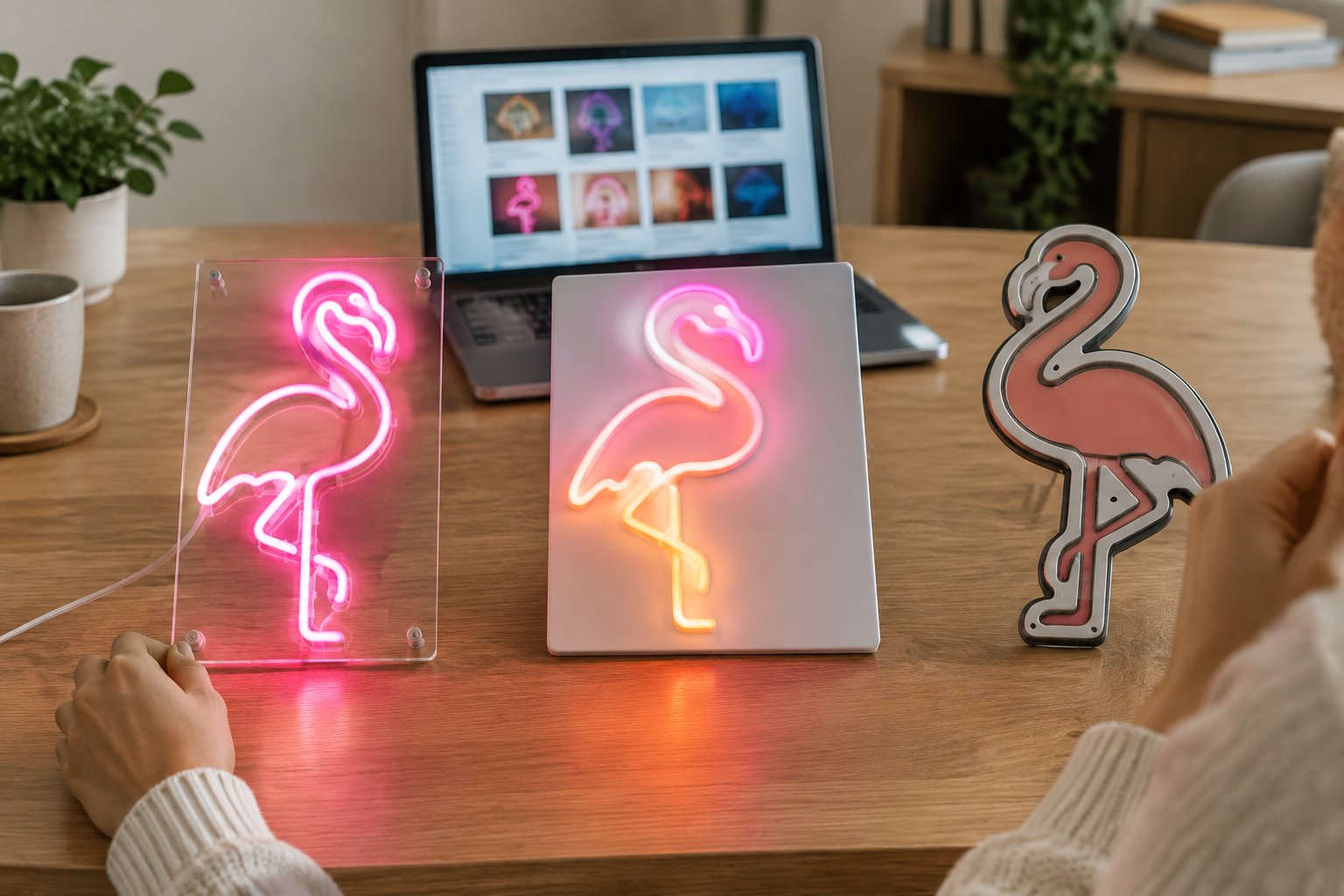
Look for clear adapter specs, a warranty you can read before buying, and a mockup of your design at real size.
When Is Traditional Glass Neon the Better Choice?
Glass neon is the better choice when authenticity carries the value. Heritage restaurants, cocktail bars, diners, and art collectors often want the true gas glow and the craftsmanship behind each bend.
It also suits permanent installations where the sign will stay put for many years and a local neon shop can service it. Because tubes and transformers are repairable, a well kept glass sign can be restored long after purchase.
Expect to pay more and plan installation with a professional.
What Should You Check for Indoor and Outdoor Neon Signs?
Indoor and outdoor neon signs need different builds. Indoors, almost any quality LED or glass sign works as long as it has ventilation around the adapter or transformer and stays away from water.
Outdoors, avoid trusting a blanket waterproof LED neon sign claim. The flex may carry an ingress protection (IP) rating, yet the sign’s true outdoor suitability depends on the complete installation: sealed connectors, a weather rated power supply, covered outlets, and protection from direct rain and sun.
Before ordering, check:
The IP rating of the flex and the power supply separately.
Whether connectors and end caps are sealed.
Where the adapter will sit and how it stays dry.
Local sign permits for storefronts.
Choose LED for Everyday Practicality or Glass for Its Signature Glow
The led neon vs glass neon choice comes down to how you will use the sign. LED neon runs at low voltage, draws roughly 3 to 4 watts per foot, weighs little, and handles homes, shops, and events with minimal upkeep. Glass neon costs more and needs careful handling, yet it rewards you with a handmade, continuous glow and repairable parts.
Whichever you choose, ask for the adapter or transformer specs, a real size mockup, and a clear warranty. For outdoor use, confirm the full installation is weather protected.
If LED fits your plans, you can explore custom LED neon signs from Toronto based GlowX, which ships worldwide and builds designs for homes, businesses, and events under its “Beyond Bright” approach.
If you searched for neon signs express, you probably want a custom sign quickly, with no surprises on price or delivery. For most homes, businesses and events in Canada, a made-to-order LED neon sign from GlowX fits that need: you get a free mockup and exact quote within 24 hours,...
A neon sign makes light by running electricity through a glowing medium shaped into letters or artwork. In a traditional sign, that medium is gas sealed inside hand-bent glass. In a modern LED neon sign, it is a strip of light-emitting diodes inside a diffusing tube. Both deliver the same...
eBay is one of the easiest places to browse neon in Canada. You can find vintage beer signs, sports logos, and cheap LED desk lights within a few minutes. The listings vary widely in condition, construction, and honesty, so the sign that looks perfect in a photo can arrive cracked,...
The most useful neon sign examples fall into four groups: names and quotes for personal spaces, icons and gamer tags for entertainment rooms, surnames and initials for weddings, and logos or welcome messages for businesses. For most homes, weddings, and businesses, a short custom LED neon sign (a name, a...
Neon signs on Etsy attract a lot of Canadian shoppers because the marketplace makes it easy to scroll hundreds of name signs, wedding backdrops, and logo pieces in one place. Most custom neon signs sold there are LED neon: flexible LED strip inside a diffusing tube, mounted on acrylic. That...
A glowing sign gives a business something a printed banner cannot: a light source people notice from across a street, a mall concourse, or a crowded trade show floor. For café owners, salon operators, gym managers, and retail teams across Canada, the practical questions are where a sign earns its...
Brighton, Ontario businesses and homeowners can get made-to-order LED neon signs from GlowX, with a free mockup and custom quote before anything is built. You choose the wording, font, colour, size, backing, and lighting effect, and production starts only after you approve the design and final price. For a café...
A neon sign board is an illuminated panel that turns a name, phrase, logo, or drawing into glowing line art, and today most are built with flexible LED tubing on an acrylic backing. For homes, businesses, weddings, and events, a custom LED neon sign board is the practical choice: it...
Most people searching for an affordable sign want something personal: a partner's name over the bed, a favourite phrase for the home bar, a wedding backdrop, or a café logo that looks finished on day one. You can get there without overspending once you know what drives the price and...
LED neon signs can run on batteries because they use low-voltage LED tubing in place of gas-filled glass. That makes a cordless glow possible at an outdoor ceremony, a market stall, or a home bar with no outlet nearby. The trade-off is runtime: a battery holds a fixed amount of...